

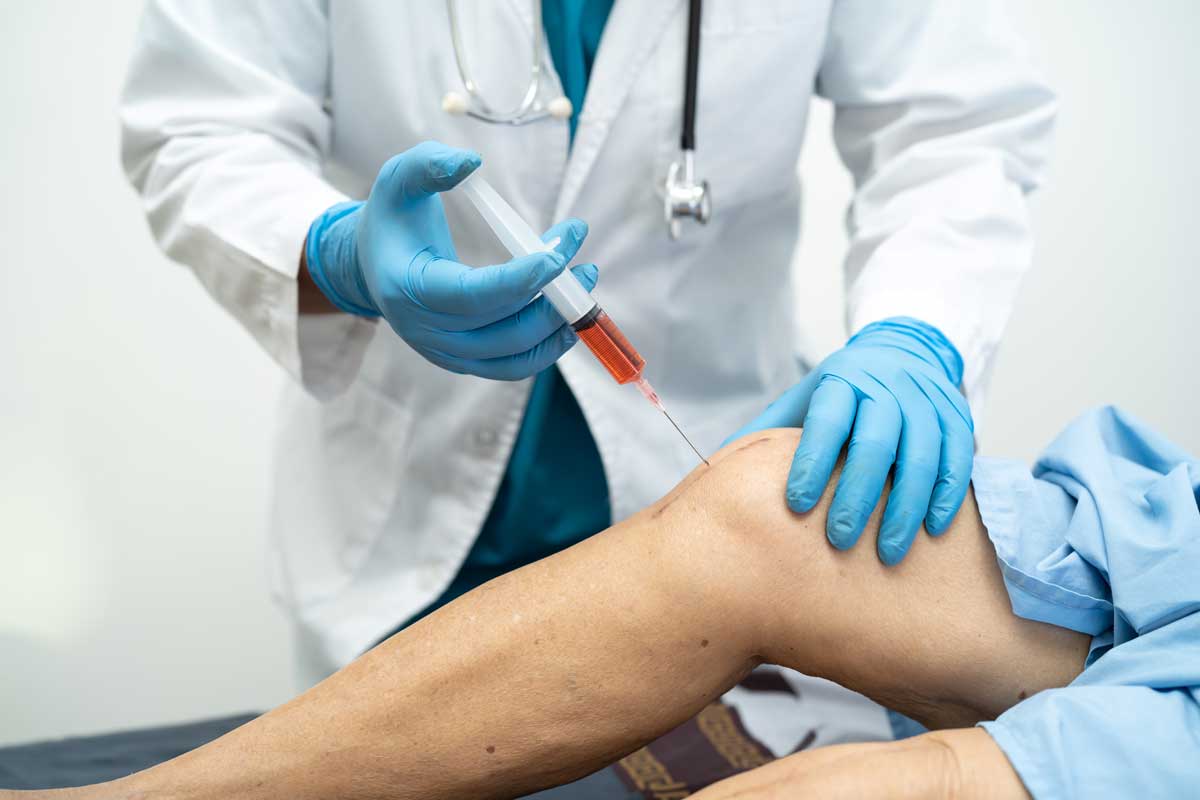
Joint pain can make everyday activities difficult, whether you’re walking through Freedom Park, enjoying a round of golf in South Charlotte, or keeping up with family activities around Mecklenburg County. For people living with arthritis, ongoing stiffness and discomfort can affect mobility, independence, and quality of life.
Platelet-rich plasma (PRP) therapy is one treatment option that may help certain patients manage joint pain without immediately pursuing surgery.
What Is PRP Therapy for Joint Pain and Arthritis?
PRP therapy for joint pain and arthritis is a medical procedure that uses concentrated platelets from a patient’s own blood. These platelets contain growth factors involved in the body’s natural healing processes. When injected into an affected joint, PRP may help reduce pain and improve function in some patients, particularly those with knee osteoarthritis.
PRP is not a cure for arthritis, and results vary based on the joint being treated, the severity of degeneration, and individual health factors.
For Charlotte residents exploring nonsurgical approaches to joint discomfort, understanding how PRP works can help clarify whether it deserves consideration.
What Charlotte patients should know
-
PRP therapy uses a sample of your own blood rather than a synthetic joint replacement material.
-
Research suggests PRP may improve pain and function for some patients with knee osteoarthritis, although the evidence remains mixed.
-
Active residents of Ballantyne and SouthPark may explore PRP when joint symptoms interfere with walking, exercise, or recreational activities.
-
Patients throughout Mecklenburg County should understand that PRP is not proven to regenerate lost cartilage or reverse advanced arthritis.
-
A medical evaluation is necessary to determine whether PRP is appropriate for a specific joint condition.
How Does PRP Therapy Work?
PRP therapy works by separating and concentrating platelets from a small blood sample before injecting the platelet-rich portion into the treatment area. Platelets release growth factors and signaling proteins that participate in tissue repair and inflammation regulation.
The procedure generally involves three steps.
Step 1: Blood Collection
A healthcare professional draws a small amount of blood from your arm, similar to a routine laboratory blood test.
Step 2: Platelet Concentration
The blood is placed in a centrifuge, which spins the sample to separate its components. The resulting platelet-rich plasma contains a higher concentration of platelets than ordinary blood.
Step 3: Joint Injection
The prepared PRP is injected into the affected joint using sterile techniques. Depending on the joint and clinical circumstances, ultrasound guidance may be used to improve injection accuracy.
For Charlotte patients, the process is generally performed in an outpatient setting, although preparation, observation, and recovery instructions vary by provider.
What Does Research Say About PRP Therapy for Arthritis?
Research on PRP therapy for arthritis suggests that some patients with knee osteoarthritis experience improvements in pain and physical function, but findings are inconsistent. Differences in PRP preparation, injection schedules, and patient characteristics make it difficult to predict who will benefit.
The American Academy of Orthopaedic Surgeons notes that PRP may reduce pain and improve function in patients with symptomatic knee osteoarthritis, although the strength of supporting evidence is limited.
Clinical studies have also produced conflicting results, including trials finding little difference between PRP and placebo injections.
Important distinctions include:
-
Knee osteoarthritis: This condition has the most substantial PRP research, with some evidence of symptom improvement.
-
Hip osteoarthritis: Evidence is more limited, and effectiveness remains uncertain.
-
Shoulder and other joints: Results depend on the underlying diagnosis, and arthritis-specific evidence is less established.
-
Advanced arthritis: PRP is less predictable when significant cartilage loss or joint deformity is present.
At Energize Health and Wellness, we believe patients considering joint pain treatments should understand both the potential benefits and the limitations before making a decision.
How Can Joint Pain and Arthritis Affect Daily Life in Charlotte?
Joint pain and arthritis can interfere with walking, climbing stairs, exercising, working, and participating in community activities throughout Charlotte. Even moderate discomfort may gradually change how people move and how often they remain physically active.
For residents in Dilworth, Myers Park, and University City, symptoms may become especially noticeable during routine activities such as walking a dog, gardening, commuting, or standing for extended periods.
North Carolina’s warm, humid summers can also make outdoor exercise less comfortable. Although some people report arthritis symptoms changing with the weather, research has not established a consistent causal relationship between humidity and arthritis pain.
Persistent discomfort can create a difficult cycle: pain discourages movement, reduced activity contributes to muscle weakness, and weaker supporting muscles may make everyday joint activities harder.
Maintaining appropriate physical activity and seeking timely medical guidance can help interrupt that cycle.
What Are the Warning Signs of Joint Problems?
Warning signs of joint problems include persistent pain, stiffness, swelling, and difficulty moving comfortably. Charlotte-area residents experiencing these symptoms should consider a medical evaluation rather than assuming discomfort is simply a normal part of aging.
Common signs include:
-
Recurring joint pain: Discomfort that returns during walking, exercise, or ordinary activities.
-
Morning stiffness: Difficulty moving a joint after waking or sitting for extended periods.
-
Swelling: Noticeable enlargement or fluid accumulation around a joint.
-
Reduced range of motion: Difficulty fully bending or straightening a knee, hip, or other joint.
-
Grinding sensations: Crepitus, or grinding and crackling, during movement.
-
Difficulty climbing stairs: Pain or weakness when moving between levels.
-
Activity-related discomfort: Symptoms that become more noticeable after prolonged standing or walking.
Sudden severe pain, a hot and swollen joint, fever, or an inability to bear weight warrants prompt medical assessment. These symptoms may indicate conditions requiring urgent treatment.
When Should You See a Healthcare Professional for Joint Pain?
You should see a healthcare professional when joint pain persists, repeatedly returns, limits daily activities, or is accompanied by swelling or restricted movement. Early assessment helps identify whether symptoms come from osteoarthritis, an injury, inflammatory arthritis, or another medical condition.
For Charlotte residents, a proper diagnosis is especially important before considering an injection-based treatment.
A clinician may recommend a physical examination, imaging studies, or additional testing depending on the symptoms.
Not every patient with joint pain needs PRP. Physical therapy, exercise modification, medication, or other treatments may be more appropriate.
What Causes Joint Pain and Arthritis?
Joint pain and arthritis can result from cartilage degeneration, previous injuries, inflammatory conditions, or repetitive stress. Identifying the underlying cause helps determine whether PRP or another treatment approach is appropriate.
Osteoarthritis
Osteoarthritis involves changes affecting cartilage, bone, and other joint structures. It commonly affects the knees, hips, hands, and spine.
Previous Sports Injuries
A history of ligament injuries, meniscus damage, or joint trauma can increase the likelihood of developing osteoarthritis later in life.
For active residents of Matthews, Huntersville, and the greater Charlotte area, understanding the long-term effects of previous injuries can support better joint care decisions.
Repetitive Joint Stress
Repeated physical demands may aggravate an existing joint condition, particularly when combined with muscle weakness or previous injury.
Inflammatory Arthritis
Conditions such as rheumatoid arthritis involve immune-system activity that causes joint inflammation. These conditions require diagnosis-specific medical management, and PRP is not an established replacement for that care.
How Can Charlotte Residents Protect Their Joints?
Charlotte residents can support joint health through low-impact exercise, strength training, weight management when appropriate, and early attention to persistent symptoms. These measures can improve function and reduce unnecessary stress on affected joints.
Practical strategies include:
-
Choose joint-friendly activities such as swimming, cycling, or walking on comfortable surfaces.
-
Strengthen the muscles surrounding painful joints with an appropriate exercise program.
-
Gradually increase activity instead of making sudden changes in exercise intensity.
-
Use supportive footwear for extended walks and daily activities.
-
Modify activities that consistently aggravate symptoms.
-
Seek professional guidance when pain or swelling persists.
During hot Carolina summers, indoor exercise or early-morning activity may make it easier to maintain a comfortable routine.
These measures can complement medical treatment, whether or not PRP becomes part of the care plan.
What Should You Expect Before, During, and After PRP Therapy?
Patients considering PRP therapy should expect a medical assessment, a blood draw, platelet preparation, an injection, and a period of post-procedure monitoring. Recovery instructions and the number of recommended treatments vary according to the joint, diagnosis, and treating clinician.
Before Your Appointment
A healthcare professional should review your symptoms, medical history, medications, and previous treatments.
Certain medications and medical conditions may affect whether PRP is suitable. Your clinician may provide instructions about anti-inflammatory medications before or after treatment.
Never stop prescribed medications without medical guidance.
During the Procedure
The clinician collects blood, processes the sample, and administers the injection.
Patients may experience pressure or discomfort during the injection. Local anesthetic practices vary because certain medications may affect platelet activity.
After the Injection
Temporary soreness, swelling, or stiffness can occur.
Patients may be advised to reduce strenuous activity temporarily and follow a gradual return-to-exercise plan.
Some people report improvements over several weeks, while others experience little or no benefit.
PRP does not provide immediate or guaranteed pain relief.
What Results Can Patients Realistically Expect From PRP Therapy?
PRP therapy may provide meaningful pain reduction and functional improvement for selected patients, particularly those with knee osteoarthritis. However, the degree and duration of improvement cannot be predicted reliably for an individual patient.
Some studies report benefits lasting several months, while others find no clinically important improvement compared with placebo.
Patients should not expect PRP to rebuild severely damaged cartilage, eliminate the need for all future treatment, or permanently stop arthritis progression.
For Charlotte residents evaluating treatment options, a realistic goal is improved comfort and function rather than a guaranteed return to completely pain-free movement.
What Common Mistakes Should Patients Avoid When Considering PRP?
Common mistakes when considering PRP include expecting permanent results, skipping a proper diagnosis, and assuming all injection procedures are identical. Avoiding these mistakes can help patients throughout Mecklenburg County make better-informed treatment decisions.
Mistake: Assuming every type of arthritis responds to PRP.
Consequence: Patients may pursue a procedure with little supporting evidence for their particular diagnosis.
Better approach: Confirm the type and severity of arthritis before discussing treatment options.
Mistake: Expecting PRP to regrow cartilage.
Consequence: Unrealistic expectations may lead to disappointment or delayed consideration of more appropriate care.
Better approach: Understand PRP primarily as a potential symptom-management treatment.
Mistake: Returning to strenuous activity too quickly.
Consequence: Excessive activity may aggravate post-injection discomfort.
Better approach: Follow the treating clinician’s recovery instructions.
Mistake: Overlooking cost and coverage.
Consequence: Patients may encounter unexpected out-of-pocket expenses.
Better approach: Request written pricing and verify insurance coverage before scheduling.
A Common Joint Pain Scenario in Charlotte
A common joint pain scenario involves an active Charlotte resident who gradually develops knee discomfort during walks, exercise, or recreational activities. Initially, the pain improves with rest, but over time, stiffness and discomfort begin interfering with normal routines.
After an evaluation, the patient learns that early knee osteoarthritis may be contributing to the symptoms.
The healthcare professional discusses exercise therapy, strengthening, weight management when appropriate, medications, and injection-based options.
If standard conservative treatments have not provided sufficient relief, PRP may be discussed as one possible option, with an explanation of the uncertain evidence and potential costs.
This is an illustrative scenario, not an actual patient case or a promised treatment outcome.
What Joint Pain Treatment Options Are Available?
Joint pain treatment options include physical therapy, exercise programs, medications, supportive devices, injections, and surgery when necessary. The most appropriate approach depends on the diagnosis, symptom severity, overall health, and individual treatment goals.
For Charlotte patients exploring nonsurgical care, understanding the available choices is an important first step.
| Treatment | Primary purpose | Important consideration |
|---|---|---|
| Physical therapy | Improve strength, mobility, and joint function | Commonly recommended as foundational care |
| Low-impact exercise | Maintain movement and physical conditioning | Activities should match individual tolerance |
| Anti-inflammatory medication | Reduce pain and inflammation | May not be appropriate for every patient |
| Corticosteroid injection | Provide temporary symptom relief | Frequency and suitability require medical guidance |
| PRP therapy | Potentially improve pain and function in selected patients | Evidence is mixed and coverage is often limited |
| Joint replacement | Treat severe joint disease when appropriate | Requires surgical evaluation and recovery |
At Energize Health and Wellness, we encourage informed conversations about joint health and treatment goals.
How Does PRP Compare With Other Arthritis Treatments?
PRP differs from traditional arthritis treatments because it uses concentrated components of the patient’s blood rather than an anti-inflammatory drug or implanted device. Its potential benefits must be weighed against uncertain effectiveness, cost, and the evidence supporting established treatments.
Exercise therapy and appropriate strengthening remain central components of osteoarthritis management.
Corticosteroid injections may provide shorter-term symptom relief in certain situations, while PRP has shown promising but inconsistent results in clinical studies.
For advanced joint degeneration, an orthopedic specialist may recommend discussing surgical options.
The best decision is based on an individualized assessment rather than assuming one treatment works for everyone.
Where Can Charlotte-Area Residents Explore Joint Pain Care?
Charlotte-area residents can explore joint pain evaluation and treatment options throughout Mecklenburg County and surrounding communities. Patients from SouthPark, Ballantyne, Matthews, Huntersville, and nearby areas may benefit from discussing their symptoms with a qualified healthcare professional.
Our team at Energize Health and Wellness can help answer questions about our available wellness services and appropriate next steps.
What Happens If You Ignore Persistent Joint Pain?
Ignoring persistent joint pain can allow an underlying condition to remain undiagnosed while discomfort and mobility limitations continue. Some patients also reduce their physical activity, potentially contributing to muscle weakness and reduced overall conditioning.
Not every episode of joint pain indicates progressive arthritis, and not every patient requires an injection.
However, ongoing symptoms deserve attention, particularly when they interfere with work, sleep, exercise, or ordinary movement.
For residents throughout the Charlotte region, timely evaluation can help establish an appropriate plan for maintaining function and managing discomfort.
Frequently Asked Questions About PRP Therapy in Charlotte, NC
Is PRP therapy effective for knee arthritis in Charlotte, NC?
PRP therapy may reduce pain and improve function for some patients with knee osteoarthritis, but research findings remain inconsistent. Charlotte patients should discuss the severity of their arthritis, previous treatments, and realistic expectations with a qualified healthcare professional before deciding whether PRP is appropriate.
How long does PRP therapy take?
A PRP appointment often takes approximately 30 to 90 minutes, depending on the blood preparation process, injection technique, and clinic workflow. The injection itself generally takes less time. Patients in Charlotte should confirm appointment duration and any required preparation directly with their treatment provider.
Is PRP therapy painful?
PRP therapy may cause temporary discomfort during the blood draw and joint injection. Some patients experience soreness, stiffness, or swelling afterward. The intensity varies by person and treatment location. A healthcare professional can explain pain-management options and the symptoms that should prompt follow-up care.
How much does PRP therapy cost in Charlotte, NC?
PRP therapy costs in Charlotte vary according to the provider, treatment area, preparation method, and number of injections recommended. Insurance coverage is often limited because many plans consider PRP investigational for certain conditions. Request a written estimate and verify benefits with your insurer before proceeding.
How many PRP injections are needed for arthritis?
The number of PRP injections varies by diagnosis, clinical protocol, and patient response. Some approaches use a single injection, while others involve a series. There is no universally established injection schedule for osteoarthritis. Your clinician should explain the recommended plan and the evidence supporting it.
Can PRP therapy help active adults in South Charlotte?
PRP may help certain active adults with knee osteoarthritis manage pain and improve physical function. However, it is not appropriate for every sports injury or joint condition. South Charlotte residents should obtain a diagnosis and discuss rehabilitation, activity modification, and established treatment options before pursuing PRP.
Is PRP therapy covered by insurance in North Carolina?
PRP therapy is frequently not covered by health insurance for osteoarthritis and other musculoskeletal conditions. Coverage varies by insurer, policy, and diagnosis. North Carolina patients should contact their insurance company for specific benefits and ask the treatment provider about self-pay pricing and potential additional fees.
How soon can I return to exercise after PRP treatment?
Returning to exercise after PRP treatment depends on the joint treated, symptoms, and the clinician’s recovery protocol. Light activity may be possible relatively soon, but strenuous exercise may need to be restricted temporarily. Charlotte patients should follow individualized instructions rather than relying on a fixed recovery timeline.
Can PRP replace knee replacement surgery?
PRP cannot reliably replace knee replacement surgery for patients with severe osteoarthritis. Some patients may experience symptom improvement, but PRP has not been shown to restore severely damaged cartilage or permanently reverse joint degeneration. An orthopedic evaluation can help determine when surgical treatment deserves consideration.
Take the Next Step Toward Better Joint Health in Charlotte
Living with joint pain does not mean you have to stop asking questions or exploring appropriate treatment options. Understanding your diagnosis, staying active within your abilities, and considering evidence-based care can help you make informed decisions about long-term joint health.
PRP therapy may be worth discussing for certain patients, particularly those with knee osteoarthritis, but realistic expectations and individualized medical guidance are essential.
Explore Your Joint Pain Treatment Options in Charlotte, NC
At Energize Health and Wellness, we’re here to help you learn more about available wellness services and the next steps toward addressing your joint health concerns.